
Continuing to bet big on reforms agenda of the new government, overseas investors have pumped in nearly Rs 32,000 crore (Rs 320 billion) in Indian equities and debt this month.

With elections elsewhere in India showing that multi-pronged contests usually work to the BJP's favour, the party can gain if it hangs on stubbornly. In the meantime, any additional support helps. That is why the archbishop's comment attracted political traction in Kerala, observes Shyam G Menon.

Organisers said last December that the entire cost of holding the Games would come to about $15.4 billion, including $2.8 billion in costs for the unprecedented postponement from 2020. Since then, the projected bill for postponement has risen to $3 billion.
The notification said the Act will come into force from a date to be announced by the government later.

This was India's time; with a strong central bank governor and a new decisive government, anything was possible.

Will Empire strike back to prevent a game changing election result, asks T P Sreenivasan.

This month, advertisements for managing directors and the senior management team for the National Bank for Financing Infrastructure and Development or NaBFID, should be out, signalling the start of a financial institution (FI) like no other the country has ever had. For this and other reasons government managers associated with the NaBFID project are convinced it should remain a 100 per cent government-owned entity. This is somewhat different from what former economic affairs secretary Tarun Bajaj said when the NaBFID Bill was being tabled in Parliament earlier this year: "To begin with, it will be 100 per cent government owned.

'With vendetta politics as its main plank, the BJP will be looking out for every opportunity to destabilise this Mahagatbandhan government.'

Wishing him, President Droupadi Murmu said the work for nation-building under his incomparable hardwork, dedication and creativity continue to advance.

The pandemic will be over but Covid will be here to stay, the scientists said as Covid numbers begin to ebb in several parts of the world, including India.
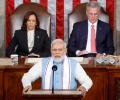
Here's the full text of Prime Minister Narendra Modi's address to a joint session of the United States Congress, delivered on Thursday.

The World Bank has approved loans totalling $1.75 billion (about Rs 13,834.54 crore) to fund India's PM Ayushman Bharat scheme and private investment to boost the economic growth. Of the total loan, $1 billion will go towards the health sector, while the rest $750 million will be in the form of development policy loan (DPL) to fill the financing gaps through private sector investment in the economy. The World Bank Board of Executive Directors approved two complementary loans of $500 million each to support and enhance India's health sector.

He said the Congress party might give a surprise or two in the Lok Sabha elections in Uttar Pradesh 'about what the party is capable of doing and to mobilise people'.

There are various estimates of India's debt to GDP ratio, but the consensus is that that it would be over 80 per cent at the end of the current fiscal year.

Kharge said the BJP made all efforts to get him disqualified as he was speaking the truth.

Indian economist Kalpana Kochhar, who heads the Human Resources Department of the International Monetary Fund, is leaving the organisation to join the Bill and Melinda Gates Foundation, the IMF announced on Wednesday. Kochhar, who served in various senior positions during her three decades at the IMF, will retire on July 30, it said.

India's national security strategy needs to be revised periodically since the global and regional geopolitical situation is dynamic, points out Commodore Venugopal Menon (retd).
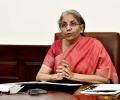
India Inc on Thursday pitched for continuation of reforms while ensuring tax and policy stability in the forthcoming Budget to prop up the economy hit hard by the COVID-19 pandemic. In the virtual pre-Budget consultation held with Finance Minister Nirmala Sitharaman, industry chambers said that government measures will help firmly entrench the nascent signs of recovery being currently seen in private investment. Capital expenditure by the government through enhanced infrastructure spending should in the meantime continue to support growth, CII president TV Narendran said.

'The last thing he would want is new tensions with India.'

AI, IoT, 3D printing, drones, data storage, quantum computing etc are all re-writing world economic order, the FM said.
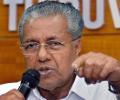
"A first step in this direction is the new project launched by Kerala to eradicate extreme poverty. A survey, that is being conducted as part of it, will be completed within four months," the CM said.

'Although Hong Kong weathered many a storm and displayed a remarkable resilience to bounce back, the developments in the territory have raised question marks with regard to its future stability and prosperity.' A revealing excerpt from Rup Narayan Das's Hong Kong Conundrum: Pangs of Transition.
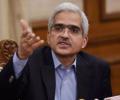
These are the highlights of RBI Governor Shaktikanta Das's statement and resolution of the Monetary Policy Committee (MPC):
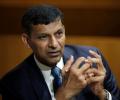
India needs foreign exchange buffer reserves to insulate itself from exchange rate volatility as we have "no friends" for swap lines and Japan was the only country that helped during the taper tantrum in 2013, former RBI Governor Raghuram Rajan said on Tuesday. Participating in a virtual event organised by economic think tank NCAER, Rajan said during the taper tantrum in 2013, India asked for swap lines, and only country who helped was Japan. "We need this (foreign exchange) reserve buffer to insulate ourselves because we have no friends.

While banks are not as exposed as the corporate sector during the initial stage of the pandemic, the strain on lenders could ultimately be profound. Banks face a second-order hit compared with the corporate and household sectors.

'From what evidence has come up, General Bajwa somehow managed to tell the Americans that I was anti-American.' 'And so, it [the plan to oust me] wasn't imported from there. It was exported from here to there.'

The Act amends Articles 15 and 16 of the Constitution, by adding a clause which allows states to make 'special provision for the advancement of any economically weaker sections of citizens'.

Highlighting the role of MSMEs in enhancing exports and helping the country achieve self reliance, Union Minister Nitin Gadkari on Monday said India does not need to import from China. "Already in automobile sector, in many sectors now, in agriculture, automobiles, everywhere, we have already found the solutions. Now we don't need to import from China," said the minister. He observed that India was exporting a lot of items instead of importing them.
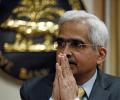
Economic activity has regained momentum from late-May after the dent caused by the second wave of COVID-19, and the pandemic's impact on the overall asset quality has been less than expected, Reserve Bank Governor Shaktikanta Das said on Thursday. However, Das flagged rising data breaches and cyber-attacks as among the risks for the recovering economy, along with others like firming global commodity prices. The governor also said the second wave had a "grievous toll" on the country.

The sweeping economic sanctions on Russia - the second largest producer of crude oil - following its invasion of Ukraine late last month can cull global and domestic growth along with the added pains of higher inflation and currency depreciation, RBI Deputy Governor Michael Patra has said. And if the war lingers on, it can even lead to deglobalisation and even a recession, he added. The ongoing war has only added a whole new dimension to the outlook, and in fact, a weighty downside, Patra said in a lecture at the industry lobby IMC on Friday evening.
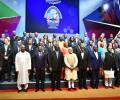
The pitch comes close on the heels of China launching its multi-billion dollar OBOR initiative

On his maiden visit to Beijing, Pakistan Prime Minister Shehbaz Sharif held talks with Chinese President Xi Jinping during which the two leaders agreed to strengthen the all-weather friendship and the USD 60 billion China-Pakistan Economic Corridor (CPEC).

The government must undo the damage inflicted by the flawed policies of globalisation, and India should be converted into a country where entrepreneurs can thrive and the entire population can participate in the economy, says Arvind Kumar.

India will either have to create a system in which certain geographical areas will wind up being permanent political outsiders at the Union level or it will have to create a system in which certain votes are weighted more heavily than others, observes Mihir S Sharma.

'Since the Covid virus has a tendency to mutate, we can continue to expect new variants of the virus to emerge and keep circulating and recirculating in the communities.'
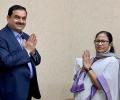
The words 'industry', 'industrial development', 'jobs', and 'employment' have been ringing with higher frequency since Mamata Banerjee stepped into her third term with landslide victory after a high-octane election last year. "Our government's next target is industrial development," the chief minister (CM) had been heard stating at different public meetings in the past few months - perhaps setting the tone for the sixth edition of the Bengal Global Business Summit (BGBS) slated for later this month. Investor summits by any state are about intent, big numbers, and tall claims. Yet in competitive federalism, its importance as a marketing tool is undeniable.

The G20 chair has suggested three areas for the talks in Argentina - the future of work, infrastructure for development and a sustainable food future, areas where India has a lot at stake.

'The recent correction in indices has made the markets cheaper to invest for the long term.'

As markets complete the first half of the calendar year 2022 (CY22) with a fall of around 9 per cent, the interest-rate hike trajectory by global central banks, paired with the conundrum of inflation and growth, will move the needle for the market, observe experts. Here's a quick rundown on what they'll react to over the next six months.

Equity benchmarks began the week on a downbeat note on Monday, weighed by heavy selling in market heavyweight Reliance Industries and persisting weakness in global bourses. The rupee plunged to its lifetime low against the US dollar amid unabated foreign fund outflows, underscoring the risk-off sentiment prevailing globally as central banks embark on policy tightening to tame soaring inflation. Slipping for the second straight session, the 30-share BSE Sensex shed 364.91 points or 0.67 per cent to close at 54,470.67.
 © 2026 Rediff.com - Advertise with us - Disclaimer - Privacy Policy - Sitemap - Feedback - About us - Terms of use - Grievances